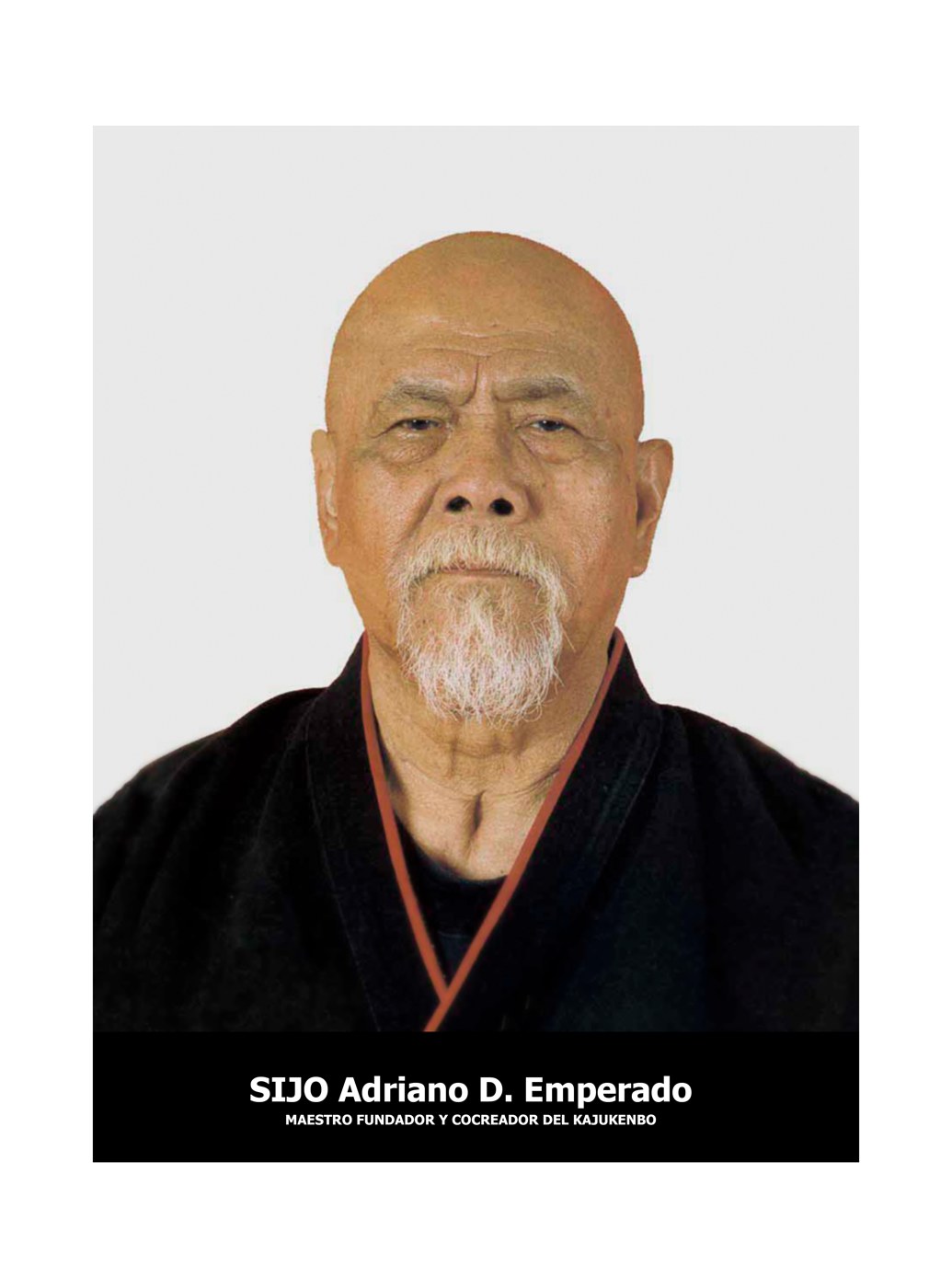
Las vivencias de Sijo Emperado en Palama
Relato de sus recuerdos de infancia, la vida en Palama Settlement y sus primeras clases de Kajukenbo, a partir de una conversación con John Bishop.
Una voz directa para conocer cómo era el barrio, quiénes acudían al centro comunitario y cómo se relacionaban las primeras escuelas de artes marciales de Honolulu.
Encuentros con Sijo Emperado
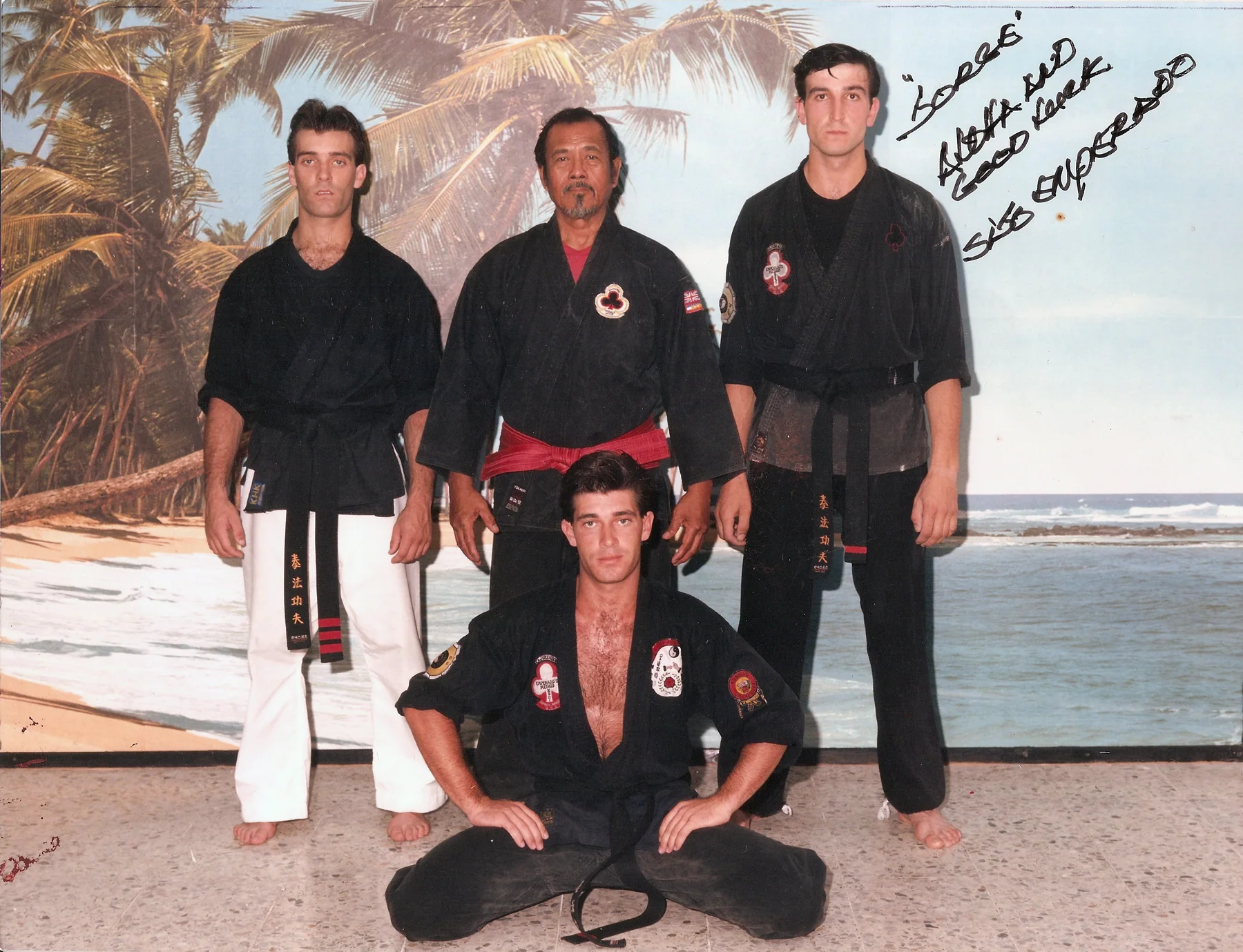
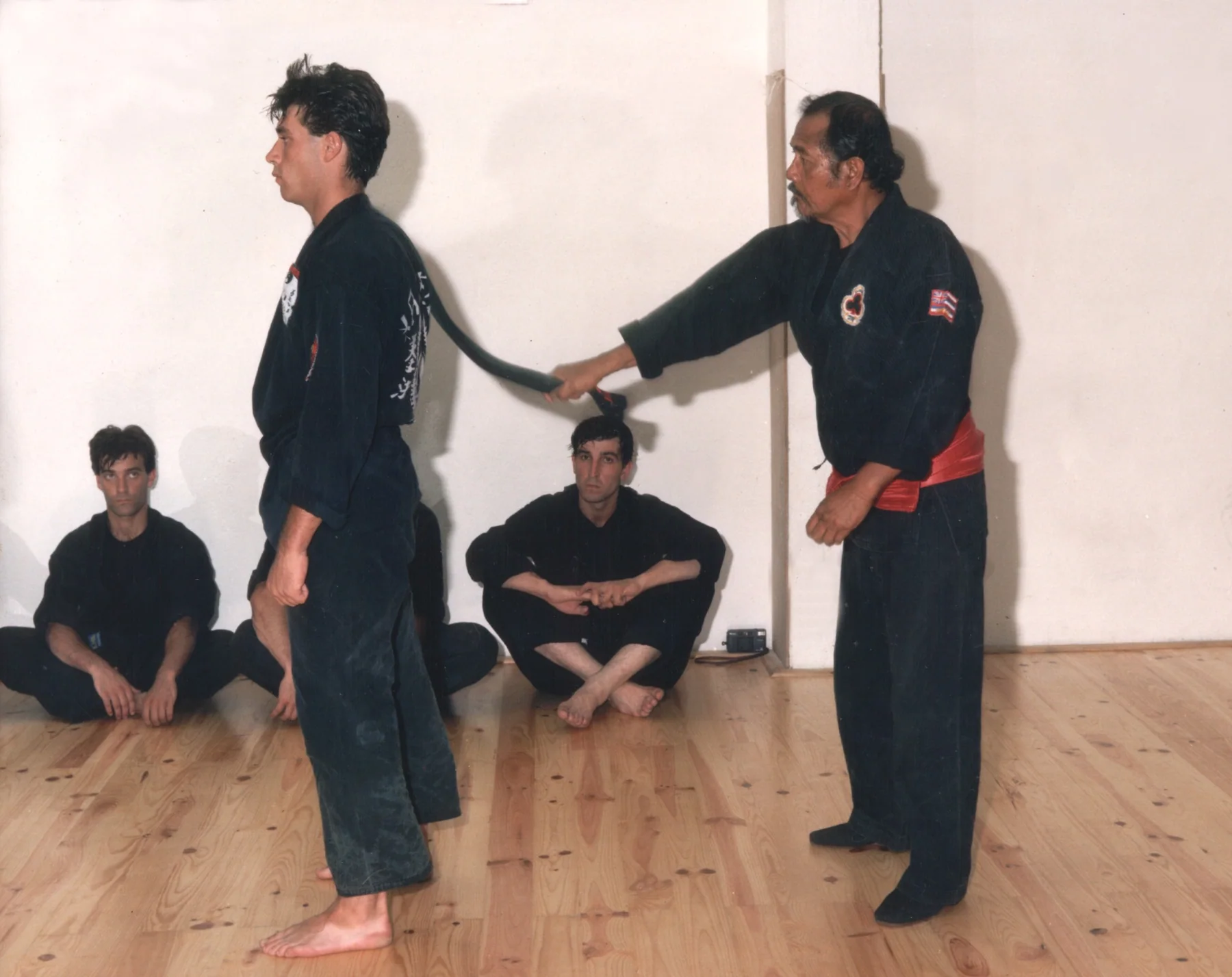
Entrevistador: ¿Cómo se llama?
John Bishop: John Bishop.
Sijo Emperado: John Bishop. He oído hablar bien de usted.
John Bishop: Gracias.
Sijo Emperado: Nosotros crecimos en Palama Settlement.
Entrevistador: ¿Qué es Palama Settlement?
Sijo Emperado: Palama es un barrio. Palama Settlement es un centro recreativo; principalmente, un centro para atender a la gente pobre de la zona de viviendas de Vineyard Street. Toda aquella zona era de gente pobre.
Entrevistador: Entonces, ¿Palama Settlement era realmente el centro recreativo o era toda la comunidad?
Sijo Emperado: Era para la comunidad. Para la gente pobre había dentista, asistencia social y piscina. Solo pagabas diez centavos al año como cuota de socio y podías utilizar todas las instalaciones: natación, clubes, baile, baloncesto, gimnasio, béisbol, fútbol, de todo. Y allí tenía mi escuela. Era aproximadamente del tamaño de esta habitación.
Entrevistador: ¿Recuerda si había más de una escuela allí? ¿Había una escuela de Kajukenbo en Palama Settlement en los años cincuenta? ¿Había una escuela de judo o alguna otra cosa?
Sijo Emperado: Sí, había clases de judo. Había de todo: levantamiento de pesas y muchas otras actividades. Pero, como he dicho, para entrar en mi escuela y aprender tenías que ser miembro del centro. Por eso pagabas solo diez centavos al año.
Entrevistador: Entonces Palama Settlement no era donde usted vivía, sino un centro recreativo.
Sijo Emperado: Correcto. Yo vivía... vamos a ver, desde la calle principal hasta la otra calle...
Entrevistador: ¿Hacia la playa?
Sijo Emperado: Sí. Estaba aproximadamente a media milla de donde yo vivía.
Entrevistador: Pero al lugar donde usted vivía no lo llamaban Palama Settlement.
Sijo Emperado: No, lo llamaban Odd Lane.
Sijo Emperado: Palama Settlement era el centro recreativo que llevaba el programa Red Feather. Cuando la ciudad y el condado asumieron su gestión, porque Red Feather ya no podía mantener la comunidad y aquellas instalaciones, se hicieron cargo. Y, cuando lo hicieron, renovaron muchas cosas.
Entrevistador: Entonces sería incorrecto decir que usted creció en Palama Settlement. Palama Settlement era una zona recreativa.
Sijo Emperado: Sí. Nosotros crecimos en ese distrito.
Entrevistador: ¿En ese distrito?
Sijo Emperado: Sí, en ese distrito. Palama era una zona grande. Se extendía desde King Street hasta Lillian Street y hacia Hofstaling Road.
Entrevistador: ¿Una zona de varias millas?
Sijo Emperado: Sí, más o menos una milla cuadrada, dos o tres millas en total.
Entrevistador: Un centro polivalente: salas de baile, salas de entrenamiento...
Sijo Emperado: Sí, dentro de Palama Settlement. Nosotros vivíamos en Odd Lane y podíamos ir andando. Construyeron Palama Settlement para ayudar a la gente pobre y mantener a los niños fuera de las calles. Por eso había allí tantos niños.
Sijo Emperado: Una vez al año organizaban una actividad: por un dólar y medio podías pasar tres días en el Wailua Fresh Air Camp. Tenías tres comidas al día y toda clase de juegos: natación, lanzamiento de herraduras, béisbol, de todo. Era para ayudar a gente pobre como yo. ¡Joder! Ya podía darme por satisfecho si tenía un solo pantalón; siempre llevaba el mismo.
Entrevistador: ¿Había alguna escuela de kárate antes de que usted abriera la suya?
Sijo Emperado: No, no había. Lo que había era Kenpo, Kenpo Jiu-Jitsu, con Thomas Young. Thomas Young tenía alumnos como...
Entrevistador: ¿Uno de los McCandless? ¿Estaba McCandless allí?
Sijo Emperado: Sí, Woodrow McCandless y el profesor Chow. Todos habían sido alumnos de Mitose. Había otro hombre, pero ya no recuerdo su nombre. Después comenzaron a abrir sus propias escuelas.
Sijo Emperado: El profesor Chow abrió su escuela. Y Woodrow McCandless, cuando vio que mi técnica era diferente de la de Mitose, vino porque quería aprenderla. Le dije: «Puedes entrenar conmigo, pero respetaremos nuestros respectivos grados». Él estaba dispuesto a empezar como cinturón blanco. Yo le dije: «No, no, no. Conserva tu cinturón negro. Con el tiempo aprenderás ayudándome a enseñar».
Entrevistador: ¿Conocía a Woodrow McCandless?
Sijo Emperado: Eso me lo contó Thomas, Tommy Young.
Entrevistador: Ah, Tommy Young.
Sijo Emperado: Sí. Tommy Young y todos ellos estudiaron con Mitose. Tommy Young no puede decir que aquel era su cinturón negro, porque el profesor Chow, Woodrow McCandless, Tommy Young y Simeon Eli habían estudiado todos con Mitose. Todos eran cinturones negros. Entonces, ¿cómo podía decir que aquel era su alumno?
Entrevistador: ¿Era su compañero de clase?
Sijo Emperado: ¿Cómo?
Entrevistador: Era su compañero de clase, ¿verdad?
Sijo Emperado: Sí, así es; habían pasado por lo mismo.
Sijo Emperado: Después, el profesor Chow abrió su escuela en Kaheka Gym. Antes había enseñado en la CYO, la Catholic Youth Organization, en Fourth Street. Después pasó a la YMCA de Nuuanu. De allí fue a Kaheka Gym, y fue entonces cuando Woodrow McCandless se unió al profesor Chow. Después abrí yo mi escuela.
Sijo Emperado: McCandless vivía en una zona de viviendas próxima a Palama Settlement. Se acercó caminando, miró lo que hacíamos y dijo: «¡Vaya, esto es diferente de lo que nosotros hacíamos! Kajukenbo... ¡vaya!». Era más realista que aquel antiguo estilo japonés de golpear así, ¿entiende lo que quiero decir?
Sijo Emperado: Vino a hablar conmigo porque quería aprender. Le dije: «Claro que puedes aprender». Me dijo que tendría que empezar como cinturón blanco. Le contesté: «No, no. Conserva tu grado tal como está». Y siguió conmigo hasta que murió.
Interviewer: What’s your name?
John Bishop: John Bishop.
Sijo Emperado: John Bishop. I hear good things about you.
John Bishop: Thank you.
Sijo Emperado: We grew up in Palama Settlement.
Interviewer: What is Palama Settlement?
Sijo Emperado: Palama is a neighborhood. Palama Settlement is a recreation center, mainly for poor people living around Vineyard Street. That whole section was a poor neighborhood.
Interviewer: Was Palama Settlement actually the recreation center, or was it the whole community?
Sijo Emperado: It was for the community. Poor people had a dentist, welfare services and a swimming pool there. All you had to pay was ten cents for a yearly membership, and you could use the whole facility: swimming, clubs, dancing, basketball, gym, baseball, football, everything. And that is where I had my school. The school was about the size of this room.
Interviewer: Do you remember whether there was more than one school there? Was the Palama Settlement Kajukenbo school there in the fifties? Was there a judo school or anything else?
Sijo Emperado: There were judo classes, all kinds of activities, weightlifting and everything else. But, as I said, to join my school and learn you had to be a member. So you paid only ten cents a year.
Interviewer: So Palama Settlement was not where you lived. It was a recreation center.
Sijo Emperado: Right. I lived, let’s see, from the main street up there all the way to the other street...
Interviewer: Toward the beach?
Sijo Emperado: Yes. It was about half a mile from where I lived.
Interviewer: But the place where you lived was not called Palama Settlement.
Sijo Emperado: No. They called it Odd Lane.
Sijo Emperado: Palama Settlement was the recreation center run by the Red Feather Program. Later the city and county took over because the program could no longer support the community facilities. When they took over, they renovated a lot of things there.
Interviewer: So it would be wrong to say you actually grew up in Palama Settlement. It was a recreation area.
Sijo Emperado: Right. We grew up in that district.
Interviewer: That district?
Sijo Emperado: Yes, that district. Palama was a big place, running from King Street to Lillian Street and over to Hofstaling Road.
Interviewer: A couple of miles or so?
Sijo Emperado: Yes, about a square mile, two or three miles around.
Interviewer: A multi-purpose center with dancing rooms and workout rooms...
Sijo Emperado: Oh yes, at Palama Settlement. We lived on Odd Lane and could walk there. In other words, they built Palama Settlement to help poor people and to keep the kids off the streets. That is why there were so many kids there.
Sijo Emperado: Once a year, for a dollar and a half, you could go to Wailua Fresh Air Camp for three days. You had three meals a day and all kinds of games: swimming, horseshoes, baseball, everything. It was to help poor people like me. I was lucky if I had one pair of pants. I always wore the same pair.
Interviewer: Was there a karate school before you started yours?
Sijo Emperado: No, there was not. There was Kenpo, Kenpo Jiu-Jitsu, with Thomas Young. Thomas Young had students like...
Interviewer: One of the McCandless? Was McCandless there?
Sijo Emperado: Yes, Woodrow McCandless and Professor Chow. They were Mitose’s students. There was another man whose name I have forgotten. Anyway, they eventually opened their own schools.
Sijo Emperado: Professor Chow opened his school. Woodrow McCandless saw that my technique was different from Mitose’s and came over because he wanted to learn it. I told him: “You can join me, but we respect each other’s rank.” He was willing to start again as a white belt. I said: “No, no, no. Keep your black belt. Eventually you will learn by helping me teach.”
Interviewer: Did you know Woodrow McCandless?
Sijo Emperado: Thomas, Tommy Young told me that.
Interviewer: Oh, Tommy Young.
Sijo Emperado: Yes. Tommy Young and all of them studied under Mitose. Tommy Young cannot claim that was his black belt because Professor Chow, Woodrow McCandless, Tommy Young and Simeon Eli all studied under Mitose. They were all black belts, so how could he say that was his student?
Interviewer: He was his classmate?
Sijo Emperado: Huh?
Interviewer: He was his classmate, right?
Sijo Emperado: Right. In other words, they went through the same stages.
Sijo Emperado: Then Professor Chow opened a school at Kaheka Gym. Before that he taught under the CYO, the Catholic Youth Organization, on Fourth Street. After that he moved to Nuuanu YMCA. From there he went to Kaheka Gym, where Woodrow McCandless joined him. And after that I opened my school.
Sijo Emperado: McCandless lived in a housing project near Palama Settlement. He walked over, looked at what we were doing and said: “Wow, this is different from what we were doing! Kajukenbo, wow!” It was more realistic than the old Japanese style of striking like that, you know what I mean?
Sijo Emperado: He came and talked to me because he wanted to learn. I told him, “Oh, you can learn.” He said he would need to start as a white belt. I said, “No, no. Stay with the rank you have.” And he stayed with me until he died.